What boric acid actually does
Boric acid is a single compound that gently acidifies the vaginal environment. A healthy vagina sits at roughly pH 3.8–4.5 — slightly acidic. When that balance gets pushed up (after sex, your period, antibiotics, or a new partner), odour-causing and yeast-causing bacteria get an opening.
Boric acid helps push the environment back toward that acidic baseline and is thought to disrupt biofilms — the stubborn protective layers that bacteria form, which is a big reason BV keeps coming back. That biofilm-disrupting action is the main reason clinicians reach for it with recurrent cases.
So does it work — honestly?
- For recurrence and maintenance: yes, there's good evidence. Studies show boric acid used after antibiotic treatment lowers BV recurrence rates. This is its strongest, best-documented use.
- For odour and pH "resets": many people find it effective. This is the everyday reason most of our customers reach for it.
- For an active, first-time infection on its own: not reliably. If you've never been diagnosed and you skip treatment to use only boric acid, it may not clear it. See a provider first.
Boric acid is a tool, not a miracle. Used in the right moment, it works. Used as a substitute for medical care, it disappoints.
Boric acid vs probiotics vs antibiotics
People treat these like rivals. They're actually a team.
| What it does | Best for | Limitation | |
|---|---|---|---|
| Boric acid | Acidifies environment, disrupts biofilms | Recurrence, odour, pH resets | Not for active infection alone; not in pregnancy |
| Probiotics | Re-seed good bacteria over time | Long-term microbiome support | Slower; works best with something acidifying |
| Antibiotics (Rx) | Kill the active infection | A diagnosed, active flare | Don't prevent recurrence on their own |
The honest takeaway clinicians repeat: boric acid + a probiotic is a stronger long-game than either alone, because boric acid handles the reset and the probiotic helps it last. Antibiotics are for the active infection your doctor diagnoses.
What to actually look for in a suppository
- Single ingredient. You want boric acid — not boric acid blended with fragrance, dyes, or filler "herbs." Fewer ingredients, fewer things to react to.
- Standard dose. 600 mg is the dose most studies use.
- Clean insertion. A dedicated applicator keeps it hygienic and gets it where it needs to go — no mess, no guessing.
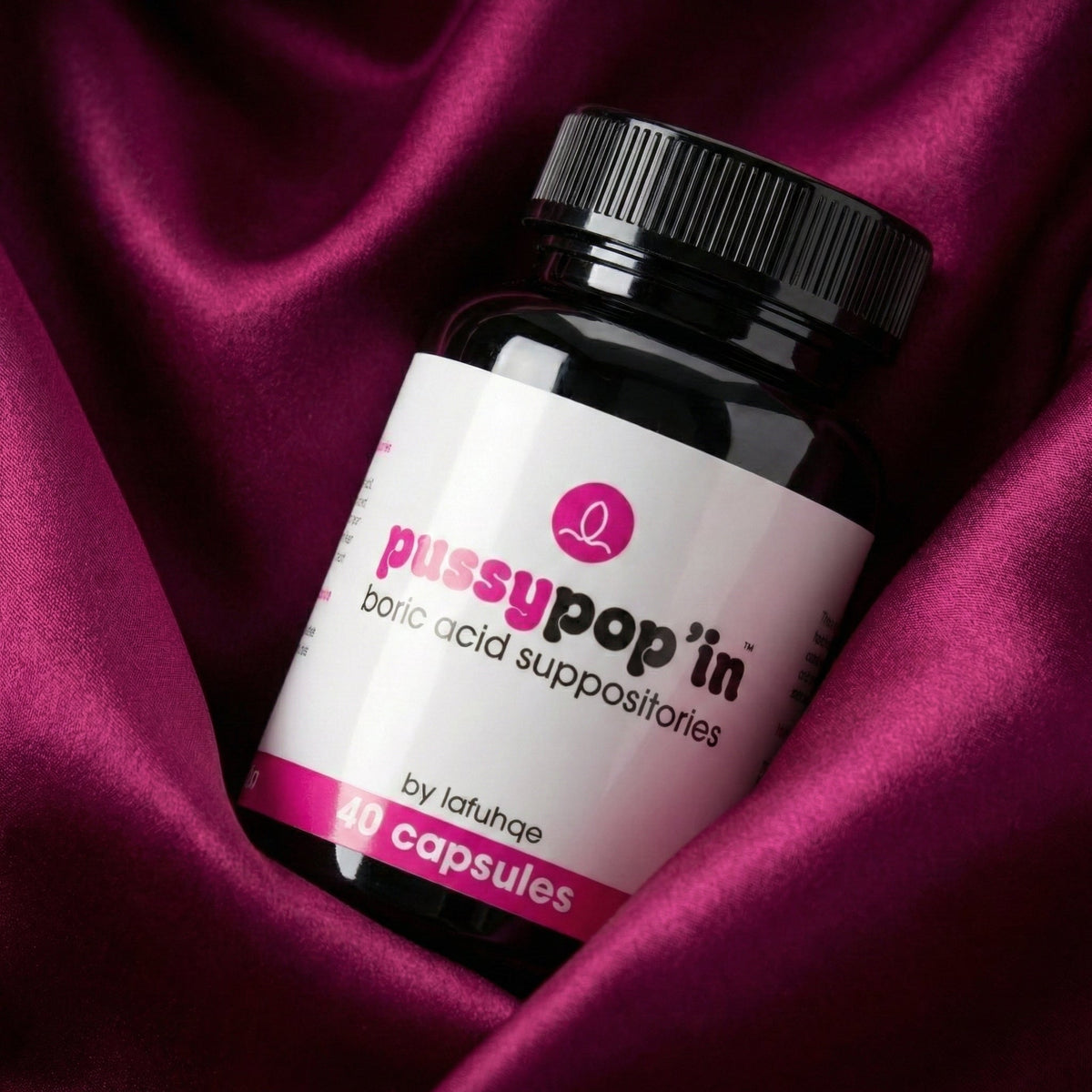
This is where PoosyPop'in fits: a single-ingredient 600 mg boric acid insert — no fragrance, no fillers — that pairs with our Applicunts applicators for clean placement. Over 500,000 units later, it's the one our customers keep coming back to. A tool that does one job well, used the way this guide describes.
What people actually say
Search "boric acid suppositories" on Reddit or in reviews and a clear pattern shows up: people who use it for recurrence and odour maintenance rave about it; people who expected it to instantly cure an active, untreated infection are the ones let down. That lines up exactly with the research — and it's why we'd rather set the right expectation than oversell.
Safety — read this part
- Never take boric acid by mouth. Suppositories are for vaginal use only. It's toxic if swallowed — keep away from kids and pets.
- Do not use during pregnancy or if you're trying to conceive, unless a provider tells you otherwise.
- Check in with a health professional you trust — your doctor, naturopath, or midwife — for a first-time infection, fever, pelvic pain, unusual bleeding, or symptoms that don't improve.
- Mild watery discharge for a day or two is common; stop if you get burning or irritation.
This article is for education, not medical advice. LAFUHQE products are intended to support everyday freshness and pH balance — not to diagnose, treat, or cure any condition. Talk to a health professional you trust — a doctor, naturopath, or midwife — about infections or persistent symptoms.